Products
Contract Lifecycle Management
Customer-Supplier Relationship Management
Third Party Risk Management
DORA Regulations
Governance, Risk & Compliance (GRC)
Brooklyn ESGa+
Digital Assessment Frameworks
Integrations
Use Cases
Onboarding & Segmentation
Policy, Governance & Workload Orchestration
Performance, Scorecards & Reporting
SLA & KPI Processing
Contract & Obligation Management
Innovation, Issues, Change & Dispute Management
Structured Reviews & Action Tracking
Operational Risk Capture, Mitigation & Controls
Third Party Risk Management
Meeting Regulatory Compliance
Environmental, Social and Governance
Contract Assessments
Services
Services for Success
Professional Services
Rapid Start Programme
Resources
News & Insights
Resource Library
Upcoming Events
Company
About us
Partners
Meet The Team
Careers
Try BrooklynFlex
Book a Discovery Call
Try BrooklynFlex
Book a Discovery Call
Products
Contract Lifecycle Management
Customer-Supplier Relationship Management
Third Party Risk Management
DORA Regulations
Governance, Risk & Compliance (GRC)
Brooklyn ESGa+
Digital Assessment Frameworks
Integrations
Use Cases
Onboarding & Segmentation
Policy, Governance & Workload Orchestration
Performance, Scorecards & Reporting
SLA & KPI Processing
Contract & Obligation Management
Innovation, Issues, Change & Dispute Management
Structured Reviews & Action Tracking
Operational Risk Capture, Mitigation & Controls
Third Party Risk Management
Meeting Regulatory Compliance
Environmental, Social and Governance
Contract Assessments
Services
Services for Success
Professional Services
Rapid Start Programme
Resources
News & Insights
Resource Library
Upcoming Events
Company
About us
Partners
Meet The Team
Careers
Solutions
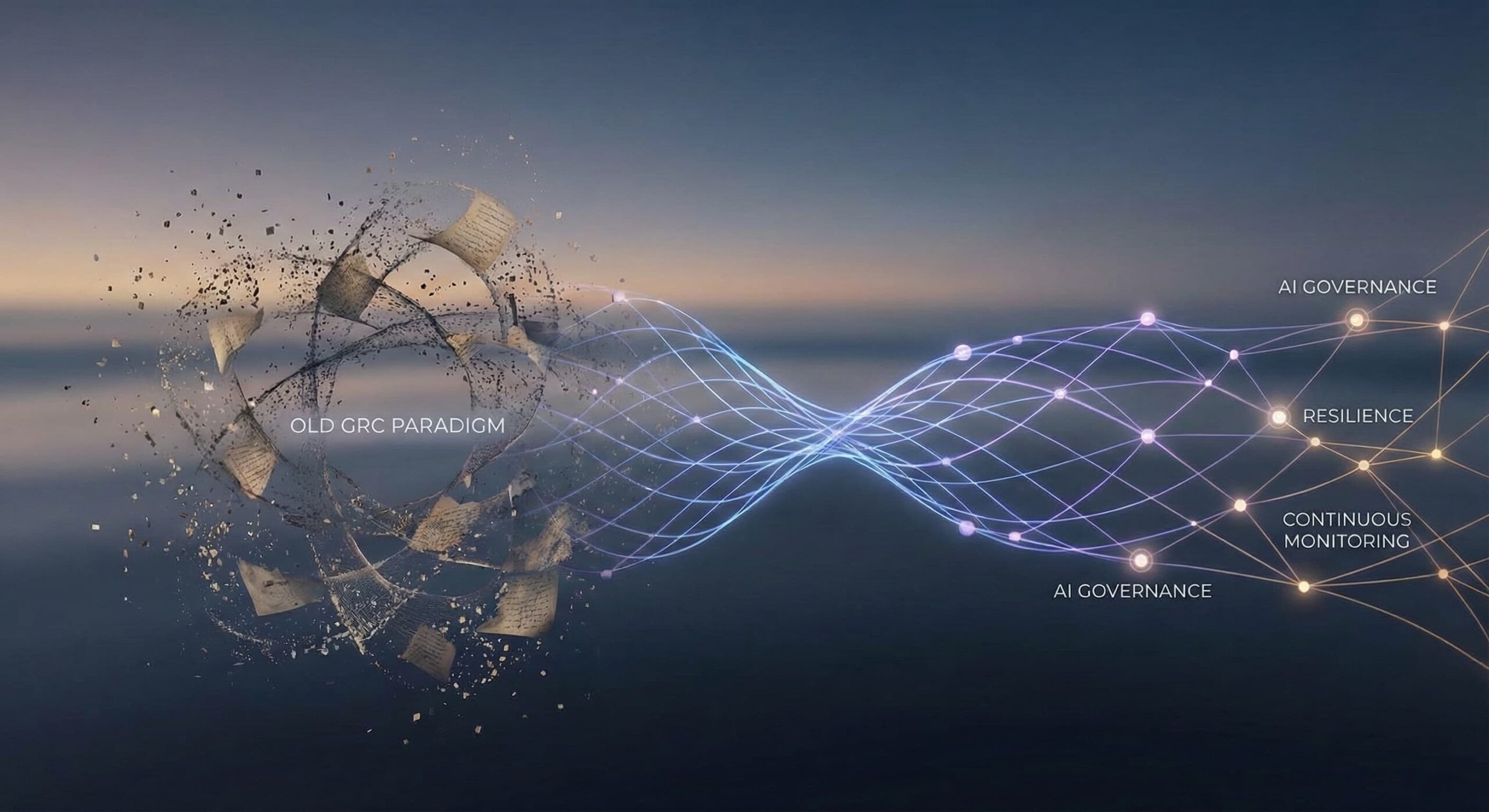
The GRC Revolution Why 2026 is the Year of Control or Chaos
February 12, 2026
Compliance
Governance
asimpson
The GRC Revolution Why 2026 is the Year of Control or Chaos
Share this article:
Share this article: