The Deadline's Passed. Now the Real Work Begins.
The January 2025 deadline marked the start of enforcement, not the end of the journey. Regulators are now actively reviewing returns, issuing queries, and preparing for the 2026 enforcement cycle. Institutions still relying on spreadsheets and consultants are feeling the cost. Those that built sustainable infrastructure are pulling ahead.
Non-compliance can result in fines of up to 1% of average daily turnover, before factoring in operational, reputational, and supervisory consequences.
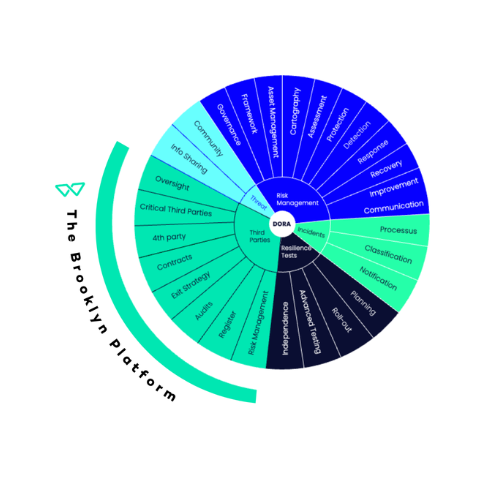
Platform capabilities
DORA Compliance, Built into Brooklyn

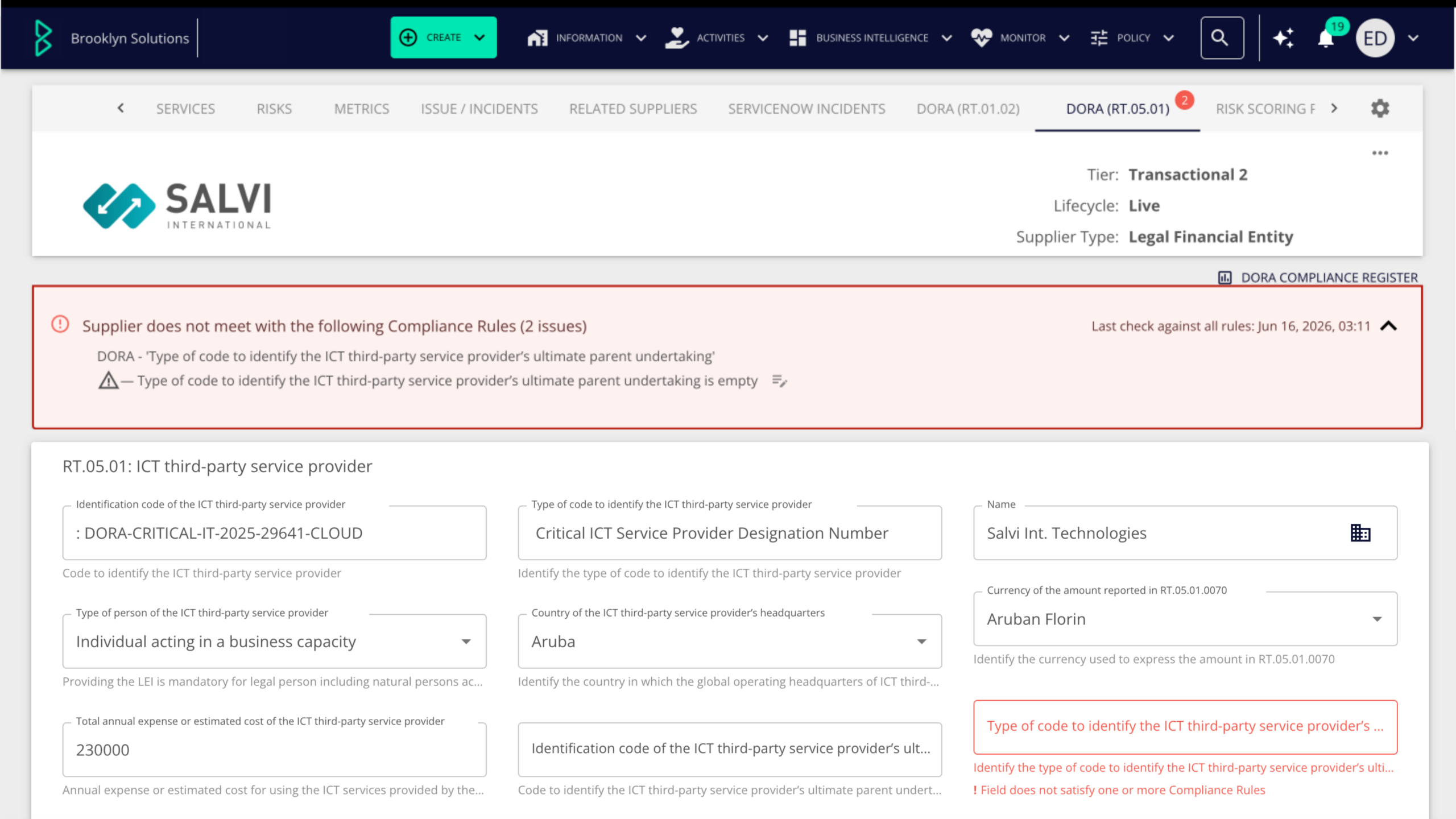
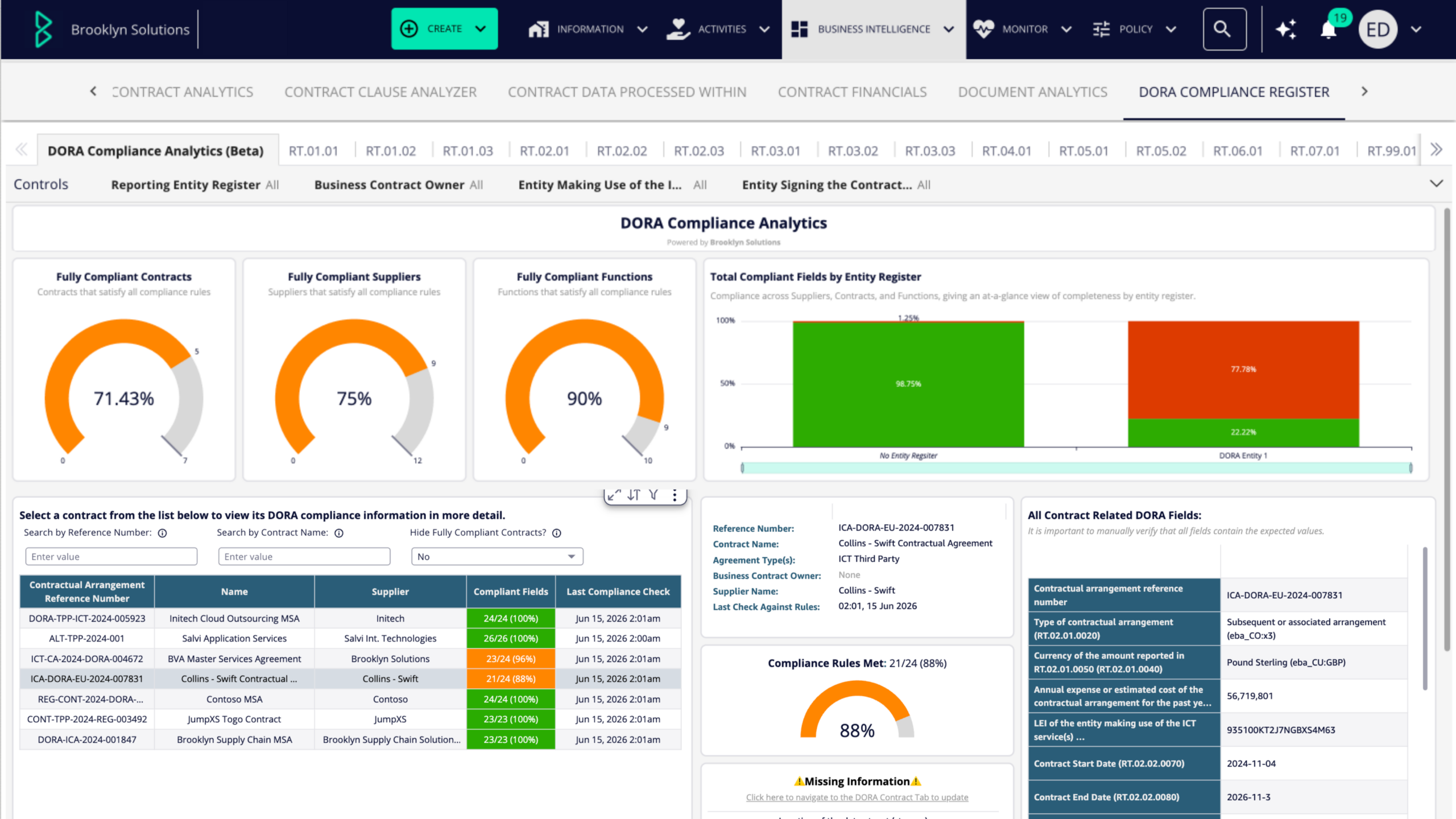
Real-Time Compliance Dashboard
A continuously updated view of your compliance posture across all reporting entities. Risk levels, supplier statuses, and data completeness in one place.

Intelligent Data Formatting
Auto-population of key fields, country code integration, and structured outputs in the exact format required for a regulatory upload. Your digital register meets the standard right out of the box.

Missing Data Identification
Brooklyn flags exactly what still needs to be completed so nothing slips through. Critical in multi-entity environments where gaps multiply quickly.

DORA Register of Information
One record managed by the owning entity, filtered consistently across every entity that uses it. One source of truth, always.

AI Contract Analysis
Brooklyn’s AI identifies required and missing clauses at scale. Gaps trigger automatic risk alerts and supplier workflows. Teams can query contracts instantly using Ask Brooklyn.

Audit-Ready Export
Export a clean, regulator-ready report in the format your auditor needs, whenever they need it. A built-in user guide walks your team through each step.
Always Digitally Fit for Audit
Brooklyn keeps your DORA register live, accurate, and ready for the next audit, never rebuilt from scratch each cycle. By bringing governance, risk and compliance (GRC) into one continuously validated system, your registers, contracts, and reporting stay connected. No annual scramble and no conflicting versions across entities, just a digital register that stays submission-ready every day of the year. That is what it means to be Always Digitally Fit for Audit.
Built for the 2026 Enforcement Cycle
The 2026 reporting cycle will bring deeper scrutiny and less tolerance for fragmented, manual processes. The institutions best positioned are those that have moved from compliance as a project to compliance as a capability.
Brooklyn supports the full lifecycle: structure your data model, consolidate fragmented registers, validate continuously against DORA compliance requirements, generate regulator-ready reports at a click, and maintain data accuracy as standard through automated workflows.