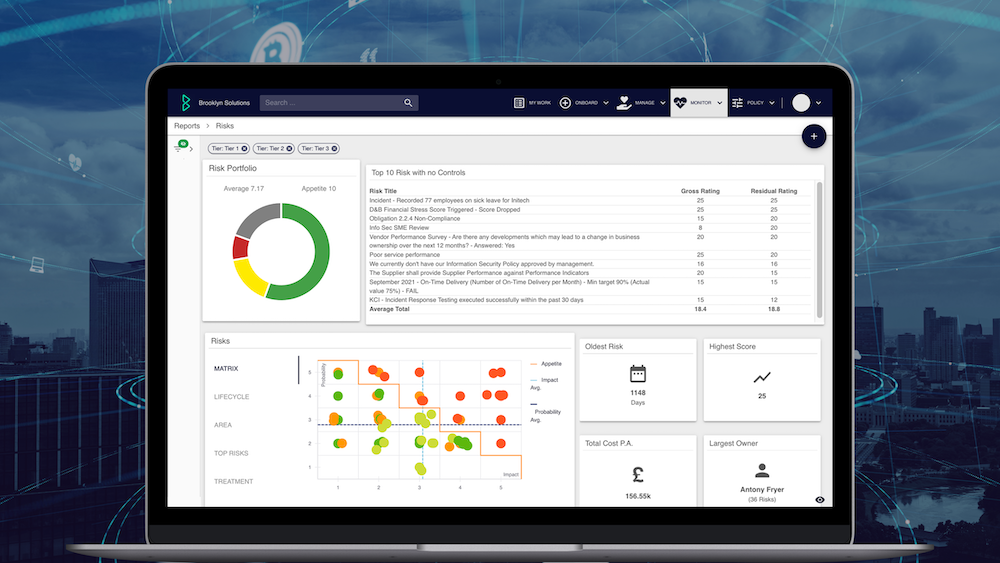
Agentic Third-Party Risk Management & Operational Resilience Software
Trusted by regulated enterprises


We came from a time where everything was within spreadsheets, PDFs, Word files. Going through 30, 40 documents, about 1,000 pages at a time, for a single contract, just to answer one internal question.
John Sherlock · Senior Contract Manager, Smart DCC
The Smart Onboarding Engine
A vendor questionnaire is a snapshot. Brooklyn’s Smart Onboarding Engine reads every disclosure, checks it against your playbooks, and never stops watching.
Most TPRM tools stop at the survey response. The Smart Onboarding Engine is what lets Brooklyn pick up where they leave off, transforming every vendor disclosure into something verified, scored, and continuously monitored.
01
Ingest
Pulls in vendor SOC2, ISO, and ESG disclosures in any format and reads them in full.
02
Verify
Uses Semantic Reasoning to cross-reference every disclosure against your internal risk playbooks.
03
Detect Gaps
Flags non-compliant clauses and missing evidence, such as a non-compliant Article 28 clause under the EU AI Act.
04
Remediate & Monitor
Autonomously triggers a remediation workflow or requests clarifying evidence, then keeps monitoring continuously.
The result: third-party risk that’s no longer frozen at onboarding, but continuously verified, owned, and under control.
What is Agentic TPRM?
An Agentic TPRM platform doesn’t just store and track vendor assessments. It monitors third parties continuously, verifies their risk posture against live evidence, uncovers hidden concentration risk, and initiates remediation, all autonomously.
Brooklyn’s Agentic TPRM is built on Ask Brooklyn, our conversational AI engine powered by Anthropic’s Claude on AWS Bedrock, replacing static, point-in-time surveys with continuous agentic discovery across the full vendor lifecycle: from onboarding and evidence verification through Nth-party mapping, continuous monitoring, and regulatory compliance.
Yesterday
Annual surveys
Static questionnaires. Outdated the moment they’re saved.
Then
Automated workflows
Rules and reminders, but still point-in-time snapshots.
Now
Continuous agentic discovery
Agentic TPRM. Risk that’s monitored, verified, and acted on.
This is a shift from point-in-time blindness to continuous risk intelligence.
The problem with check-the-box risk
Stop Managing Risk in the Rearview Mirror
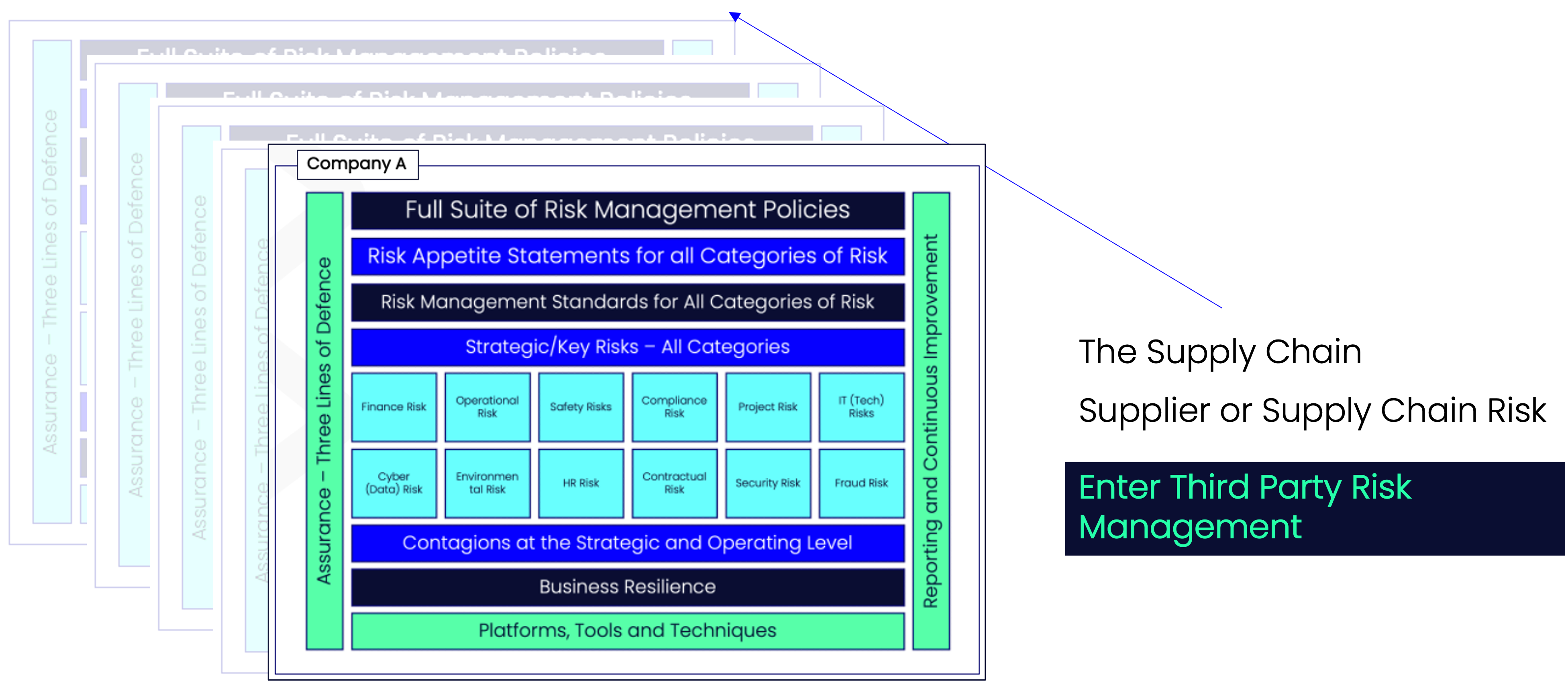
In today’s volatile global economy, a check-the-box approach to risk is no longer enough. Most organisations are trapped in a cycle of reactive firefighting, relying on static annual surveys and fragmented spreadsheets that are outdated the moment they are saved.
This creates a dangerous point-in-time blindness, where emerging threats, from financial instability to geopolitical shifts, go undetected until they become full-blown crises.
Meet Ask Brooklyn
From point-in-time blindness to Continuous Agentic Discovery
In 2026, a check-the-box approach creates a false sense of security. Ask Brooklyn replaces static, point-in-time assessments with continuous, autonomous risk discovery — shifting your team from data collectors to strategic risk governors.
Replaces static, point-in-time assessments with always-on monitoring of vendor posture.
Ask Brooklyn autonomously verifies vendor posture through live data feeds, no chasing questionnaires.
Analyses real evidence to validate risk, so your team governs strategically instead of collecting data.
See Ask Brooklyn for yourself
See continuous risk discovery in action
Watch a quick demo of how Ask Brooklyn replaces static surveys with always-on monitoring.
The Agentic Governance Core: Transforming Risk into Resilience
Brooklyn utilises a Multi-Agent Orchestration layer to automate the entire vendor lifecycle. By integrating Dynamic Risk Ingestion with global threat feeds, our agents perform recursive Nth-Party Mapping, uncovering hidden concentration risks in your 4th and 5th party tiers that traditional GRC tools miss.

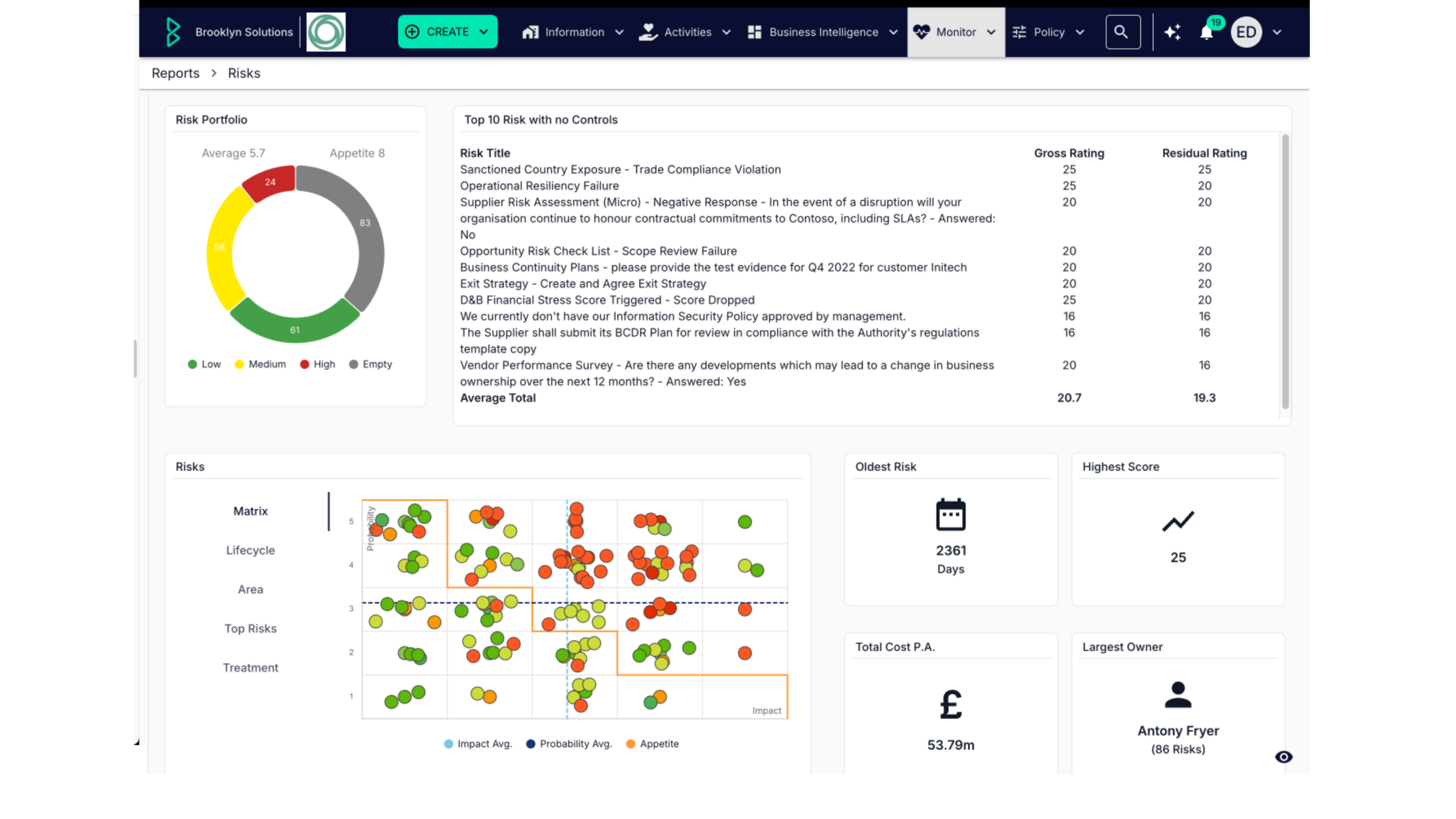
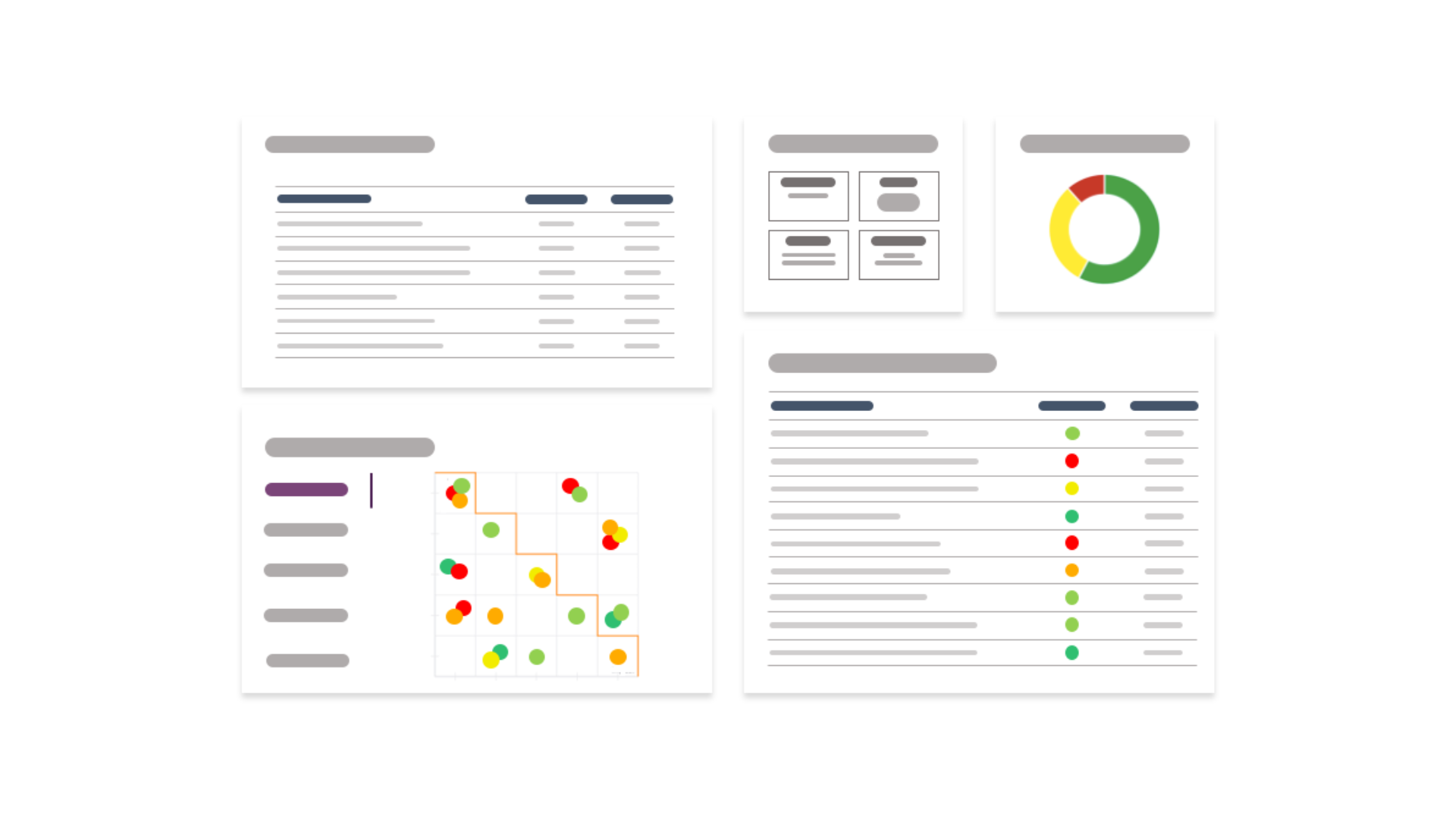
Visibility of your Third Party Risk
Providing the high-level snapshot you need to monitor, manage and mitigate third-party risk. Our dashboard provides a quick overview of your risk profile, active risks, risk ratings and a full log, ensuring you are always informed and on top of your third-party risk management.
Autonomous Evidence Verification & Smart Onboarding
Eliminate manual review cycles. Our Smart Onboarding Engine (SOE) uses Semantic Reasoning to cross-reference vendor SOC2, ISO, and ESG disclosures against your internal risk playbooks. If a gap is detected, such as a non-compliant Article 28 clause under the EU AI Act, the agent autonomously triggers a remediation workflow or requests specific clarifying evidence.
Built for regulated environments
Enterprise-grade AI governance, by design
Powered by Claude (Anthropic) via Amazon Bedrock, API-based only.
100% client-side execution, context-aware to user, page, permissions, and session.
No client data is used for external model training; it stays securely contained within your environment.
Can redirect to any customer-approved AI model with an API interface.
Human oversight, transparency, risk classification, and explainability built in.
Customers can disable specific AI features, with acknowledged capability trade-offs.
Beyond detection
From monitoring risk to predicting it
Ask Brooklyn doesn’t just surface risks as they emerge, it anticipates them, so your team can act before a threat becomes a crisis.
Predictive analytics flag likely high-risk entities and emerging risk trends, enabling proactive identification and scenario generation for future planning.
AI identifies patterns across your supplier base, such as recurring control gaps and systemic weaknesses, to inform your risk management strategy.
Technical Specification: Agentic TPRM Governance Engine
| Feature | Methodology | Autonomous Governance Output |
|---|---|---|
| Continuous Monitoring | Real-time API & Web-Scraping Agents | Detects breach signals or financial distress before self-reporting. |
| Assessment Automation | LLM-based Evidence Verification | Automatically cross-references vendor SOC2/ISO docs against Brooklyn’s risk library. |
| Nth-Party Discovery | Recursive Graph Analysis | Identifies concentration risk in your 4th and 5th-party supply chain. |
| Regulatory Guardrails | Compliance Mapping (DORA/ESG) | Automatically triggers “Corrective Action Plans” for non-compliant vendors. |
| Impact Analysis | Semantic Relationship Modeling | Predicts exactly which business units fail if a specific vendor goes offline. |
Risk Capture in Real-time
Capture risks comprehensively through reviews, surveys, and assessments ensuring third-party risk is not missed. The Risk Register provides an automated log for real-time action tracking, prompting risk owners for necessary steps. Utilise risk scoring to establish mitigation measures aligned with risk policies and secure outsourcing practices.
Audited Third-Party Risk Logs
Dynamically analyse and monitor critical risks with outsourced third parties. Assess customer/supplier risk against mitigation plans in real-time. Streamline threat response with automated workflows, facilitating effective communication and action.
External Response Management
Connect with diverse external data feeds and advanced AI for proactive analysis. The platform enhances risk profiles in real-time and integrates seamlessly with platforms like Creditsafe and Dun & Bradstreet for comprehensive risk management.
Audit-Ready Governance for DORA & ESG
Brooklyn provides an Immutable Audit Trail for every third-party interaction. Our dedicated DORA Compliance Module automates ICT Third-Party Risk requirements, including Concentration Risk Reporting and Threat-Led Penetration Testing (TLPT) coordination. We ensure your supply chain is not just monitored, but defensible against the highest level of regulatory scrutiny.

Frequently asked questions
What is Third-Party Risk Management (TPRM) software?
TPRM software helps organisations identify, assess, monitor, and mitigate risks associated with their third-party vendors, suppliers, and partners. Unlike manual survey-based approaches, modern TPRM platforms automate risk discovery, continuous monitoring, and regulatory compliance across the full vendor lifecycle.
What’s the difference between TPRM and GRC?
GRC (Governance, Risk, and Compliance) is the overarching framework for managing an organisation’s governance policies, risk posture, and compliance obligations. TPRM is a specialised subset focused specifically on risks introduced by third-party relationships. Brooklyn sits at the intersection, providing the TPRM depth your VMO needs while feeding audit-ready data into your broader GRC programme.
How does Brooklyn’s agentic TPRM differ from traditional survey-based tools?
Traditional TPRM relies on static questionnaires and annual reassessments, point-in-time snapshots that miss emerging risks. Brooklyn uses continuous agentic discovery: autonomous evidence verification, real-time risk ingestion from external data sources (Dun & Bradstreet, regulatory feeds), and RAG-driven analysis that flags issues as they arise rather than months later.
Does Brooklyn support DORA compliance?
Yes. The platform is built with DORA’s five pillars in mind, ICT risk management, incident reporting, digital operational resilience testing, ICT third-party risk, and information sharing. Brooklyn generates immutable audit trails, concentration risk reports, and regulatory-ready evidence packs specifically designed for DORA, EBA, and PRA requirements.
How does continuous monitoring work in practice?
Brooklyn ingests data from external threat feeds, regulatory databases, and your vendor’s own disclosures. The autonomous governance engine cross-references this against your risk policies, contract obligations, and SLA commitments. When a delta is detected, a new sub-processor, a lapsed certification, a negative news event, it surfaces the finding in the risk dashboard and triggers the appropriate workflow.
Can Brooklyn integrate with our existing procurement stack?
Yes. Brooklyn connects to ERP, CRM, P2P, and CLM platforms via API. It’s designed as a “System of Intelligence” that sits above your existing systems, ingesting data from SAP Ariba, ServiceNow, or your current procurement tooling without requiring a rip-and-replace.
How long does implementation typically take?
Brooklyn’s Rapid Start Programme gets your TPRM programme operational in as little as 12 weeks. The AI-powered ingestion engine digitises legacy contracts and supplier data into structured, queryable records, accelerating the setup phase significantly compared to traditional TPRM deployments.
Does Brooklyn offer a version for smaller teams?
Yes. BrooklynFlex provides the same core TPRM capabilities for smaller teams.