DORA compliance
Why Spreadsheets are the Wrong Tool for DORA
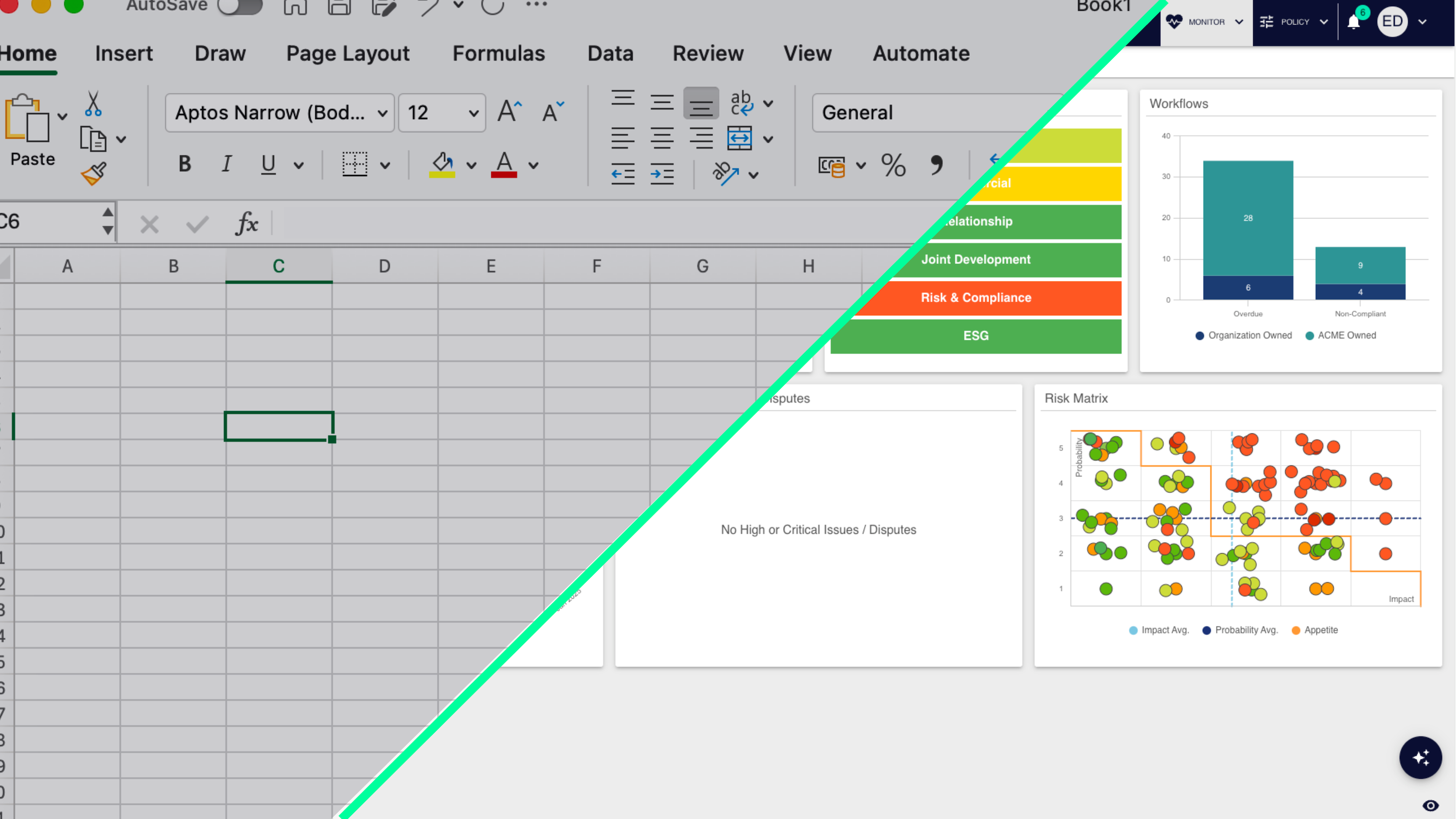
DORA compliance is tedious. It demands precision, granular data, multiple validation rules, and reporting in highly specific formats. Yet many financial institutions still rely on spreadsheets — the same tool that caused JP Morgan a $6 billion loss in the “London Whale” scandal. If you’re managing DORA compliance with Excel, you’re burning hours on manual work that a digital tool could handle in minutes. Here’s why.
The Spreadsheet Problem
According to Computer Weekly’s analysis of DORA compliance challenges, 88% of business spreadsheets contain errors. That number climbs higher in compliance work, where one typo in a field, one misaligned row, or one circular reference can cascade into a failed regulatory submission.
The ESAs ran a DORA dry-run in 2024. Only 6.5% of nearly 1,000 firms passed all 116 data quality checks and 86% of errors were caused by missing mandatory information. The European authorities explicitly recommended moving away from manual approaches like spreadsheets to automated tools. Capgemini’s research emphasises that DORA’s stringent requirements necessitate a fundamental shift in how financial institutions approach operational resilience.
7 Reasons a Digital Tool Saves You Hours (and Keeps You Compliant)
1. Automatic validation catches gaps before submission
Spreadsheets let you enter data and discover problems at audit time. A digital platform validates as you work — highlighting missing hierarchies, incomplete dates, wrong entity types — so you fix gaps immediately, not after weeks of back-and-forth with regulators.
2. One data source feeds all reports
With Excel, you capture supplier data once, then manually reformat it for EBA reporting, then reformatted it again differently for DORA. One typo in the original means hunting through multiple sheets. A digital system stores data once and auto-translates it to the specific format each regulation demands. No re-entry, no errors.
3. Audit trails and version control happen automatically
Regulators ask: “Who changed this? When? What was it before?” Spreadsheets can’t answer that reliably. Digital tools log every change with timestamps, user IDs, and previous values, so audits go from painful to straightforward.
4. Compliance analytics show you exactly where you stand
A dashboard showing 92% compliance across 284 suppliers beats manually scrolling through 50 sheets trying to figure out which ones are missing data. Digital tools highlight the 5% red items so you know exactly what to fix.
5. Rules-based logic replaces manual interpretation
DORA requirements change based on entity type, contract structure, and service category. Spreadsheets force you to remember these rules or consult documentation each time. A digital platform encodes the rules, so the right validation fields pop up automatically based on what you’re entering.
6. Reporting happens instantly in the required format
DORA’s reporting requirements include arcane formatting rules (specific codes, multi-dimensional key structures, EBA taxonomy mapping). Spreadsheets mean manual mapping and format conversion. Digital tools generate compliant reports in seconds — one click, done.
7. Collaboration replaces email chaos
When compliance, IT, and procurement are coordinating via email and shared drives, files get duplicated, edits collide, and no one knows the current version. Digital platforms give everyone access to the same data, with role-based controls and task management built in.
Percentage of firms that passed DORA dry-run validation on first attempt
86% had missing or incorrect data
The Time Math
A spreadsheet-based DORA submission typically involves: manually pulling supplier data from emails, contracts, and systems; formatting it to spec; validating it against 118+ control points; generating reports; fixing errors; revalidating; and submitting. For a mid-size institution with 50–100 critical suppliers, this takes weeks and involves dozens of manual handoffs.
A Digital Platform configured with DORA rules runs validation continuously as you work, consolidates data from multiple sources automatically, and generates audit-ready reports in minutes. The same submission takes days, not weeks.
What to Look for in a Digital Tool
Not all compliance platforms are equal. The best ones have:
- Purpose-built data models that understand DORA’s scope, entity types, and contract structures, not generic databases that force you to configure everything manually.
- Out-of-the-box DORA controls that encode the regulation’s validation rules so compliance gaps surface as you work, not during audit prep.
- Multi-regulation support so the same data can feed DORA, EBA, and other reporting requirements without re-entry.
- Governance and monitoring automation that doesn’t just report what’s missing, it prompts the right people to act and tracks progress over time.
- Audit-ready by default: complete audit trails, evidence links, and reporting dashboards that make inspection straightforward.
Brooklyn Platform Demo
Watch how the DORA register, contract compliance configuration, and compliance analytics work together in real-time: