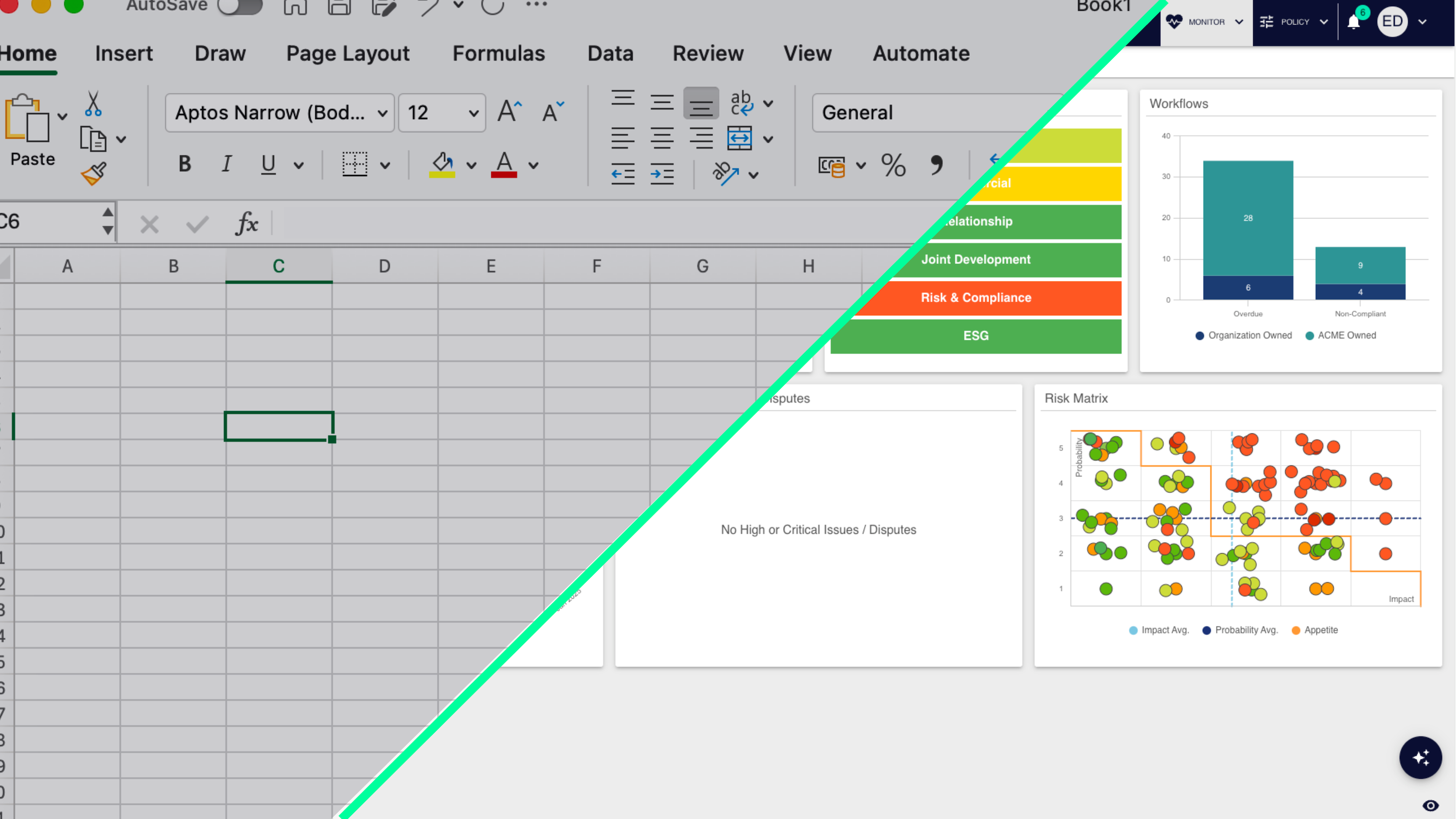
The findings of the KPMG 2026 Global Enterprise Survey confirm a significant shift in the corporate landscape where 75% of leaders identify auditability and security as the primary bottlenecks to digital transformation. In an era defined by the rapid deployment of Agentic AI and complex supply chains, the traditional approach to Third Party Risk Management TPRM is no longer sufficient. Organisations are hitting a Compliance Wall where legacy point in time assessments fail to meet the rigorous demands of modern regulators.
The Regulatory Shift Beyond the Point in Time Assessment
The regulatory updates of the past week specifically the EBA April 29 guidelines on Supervisory Independence and the ongoing enforcement of DORA underscore a fundamental change in expectations. Regulators have moved past intent. They now demand operational proof of resilience and independent oversight.
A static vendor assessment conducted at the point of onboarding is essentially obsolete within months. As vendors update sub processors, rotate data centres, or integrate new AI models, the risk profile of the relationship shifts in real time. Without a mechanism to capture this operational drift, firms remain compliant on paper while exposed to systemic risk in practice.
Transitioning from Screening to Solving
The current market environment requires a transition from passive screening to active, continuous risk resolution. This is the operational gap addressed by Brooklyn Solutions.
While traditional GRC and CLM tools serve as systems of record, Brooklyn Solutions functions as a system of action. By automating the Business as Usual BAU of vendor management, the platform aligns procurement, risk, and legal functions with the actual performance of the contract lifecycle.
-
Automated Evidence for DORA and EBA Rather than initiating manual audits in response to regulatory inquiries, Brooklyn Solutions enables continuous evidence collection. This ensures that proof of resilience is an inherent output of daily operations rather than a resource intensive fire drill.
-
Managing Nth Party Vulnerability The KPMG data highlights that the true risk often resides several layers deep in the supply chain. Brooklyn provides the visibility necessary to map and govern these dependencies, ensuring that concentration risks are identified before they impact operational continuity.
-
Closing the Gap Between Contract and Performance In many organisations, the legal obligations signed during onboarding are never verified against real world delivery. Brooklyn bridges this gap, ensuring that vendor performance remains strictly aligned with regulatory and security mandates.
Strategic Oversight as a Competitive Advantage
The lesson from the recent regulatory flurry is clear. The most resilient organisations in 2026 will not be those with the most extensive manuals, but those with the most sophisticated automation.
By integrating Brooklyn Solutions, firms can move beyond the Department of No. When governance is automated and oversight is real time, compliance ceases to be a hurdle to innovation. It becomes the framework that allows an organisation to scale with confidence. In the current regulatory climate, the goal is no longer just to screen for risk it is to solve for it.